Farm Field ReWild
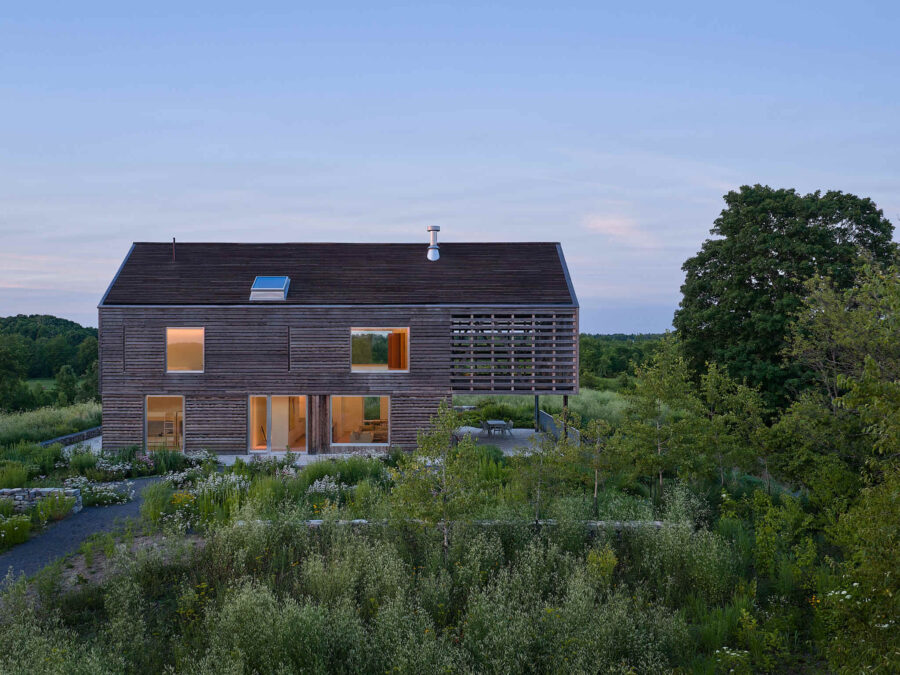
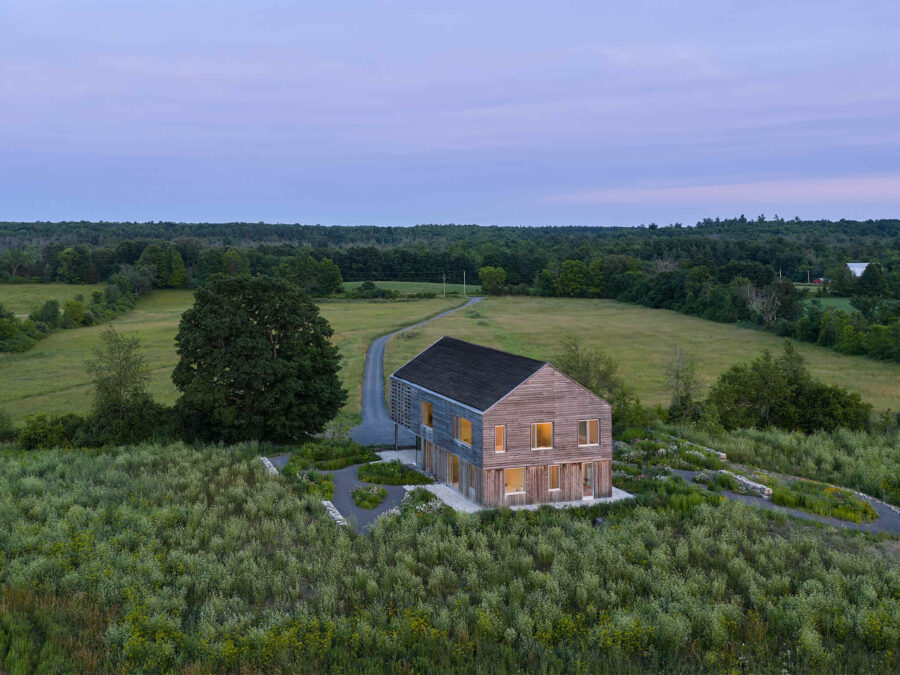
Since June 2021, VTLA has been privileged to collaborate on the reimagining of a southern Ontario farm landscape. Inspired by our clients’ nature-based goals for property stewardship, the project incorporates natural stone features and a rewilding planting design.
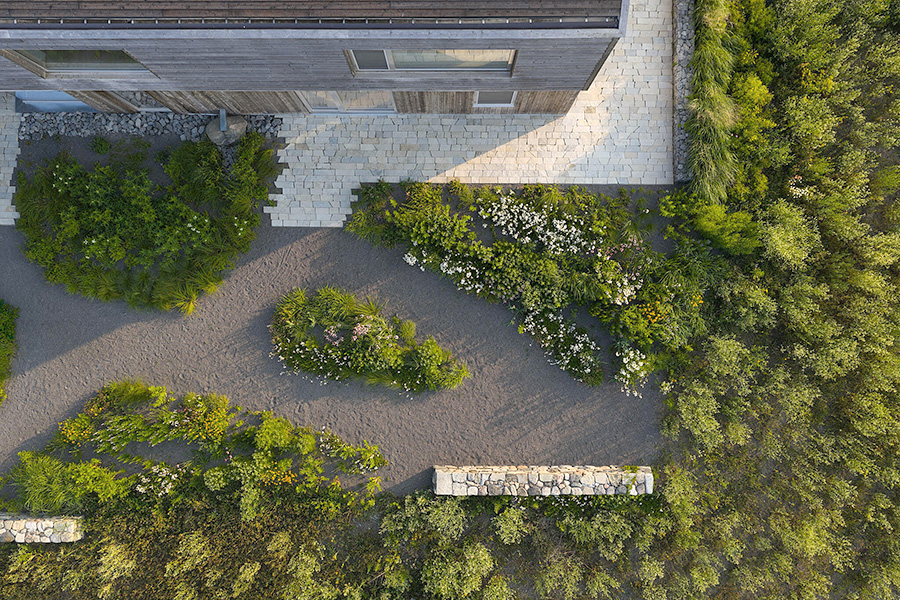
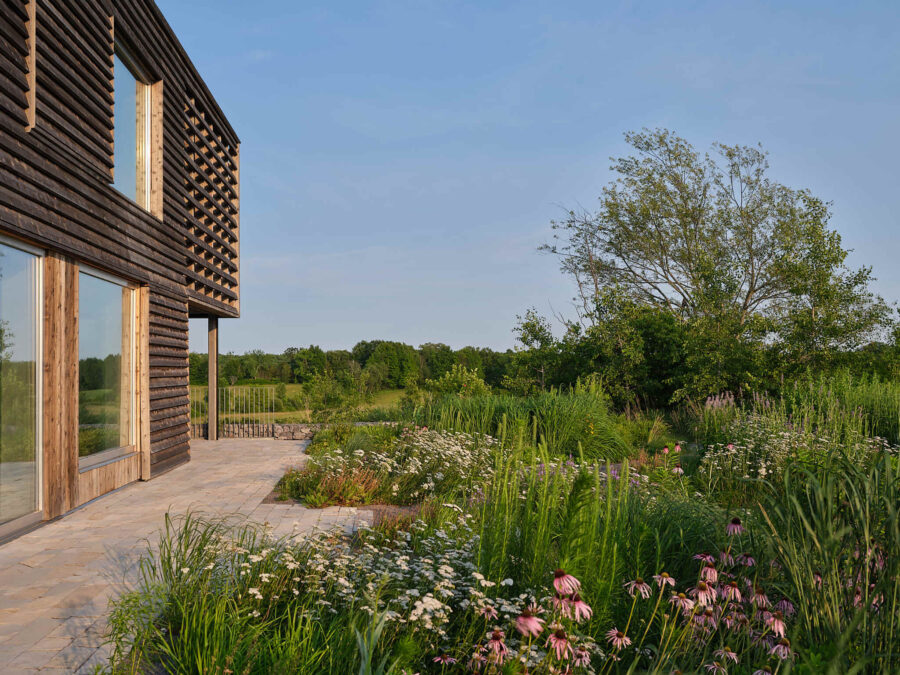
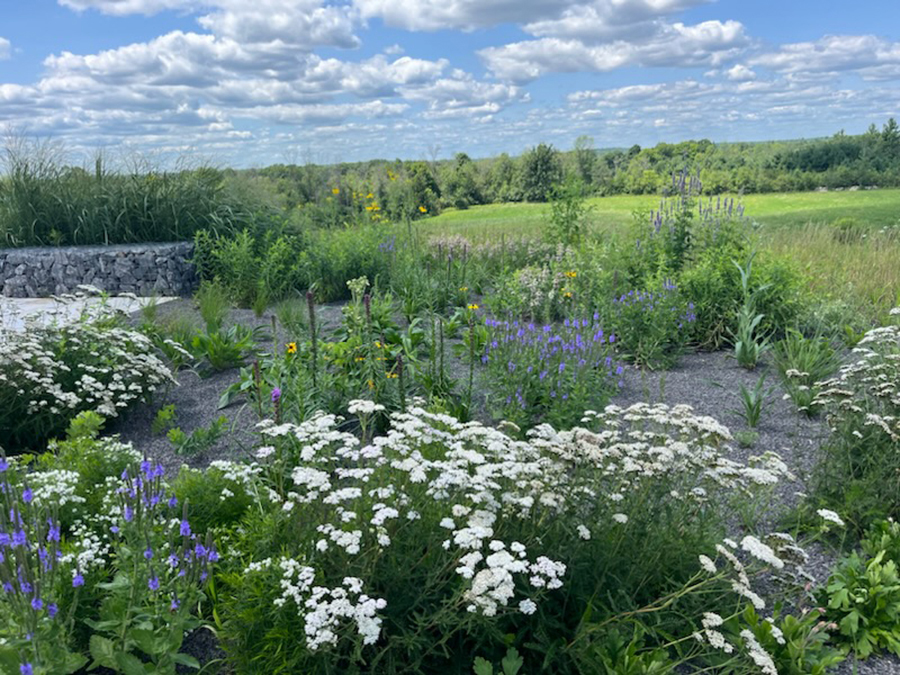
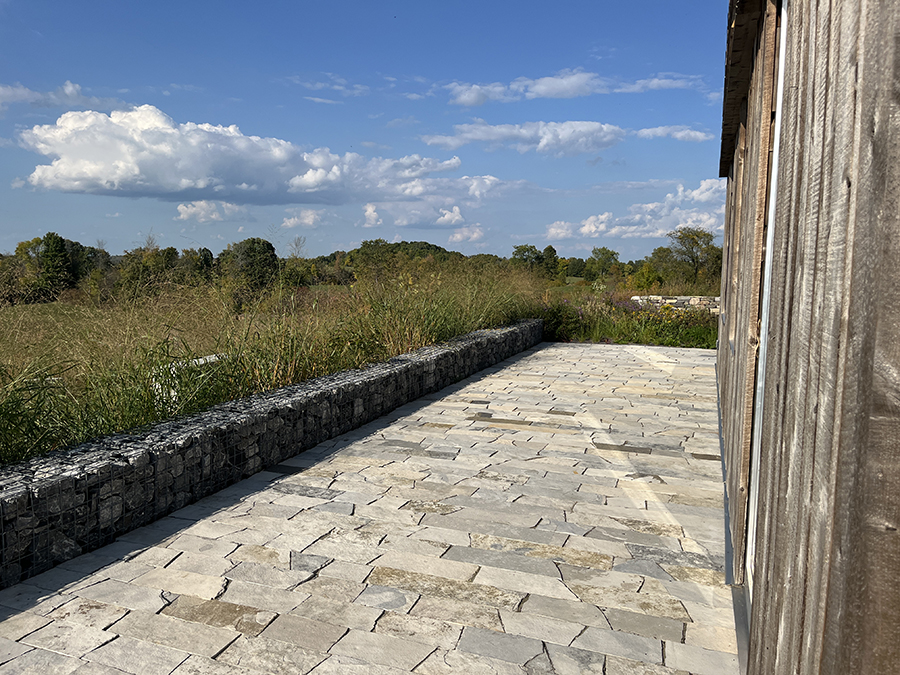
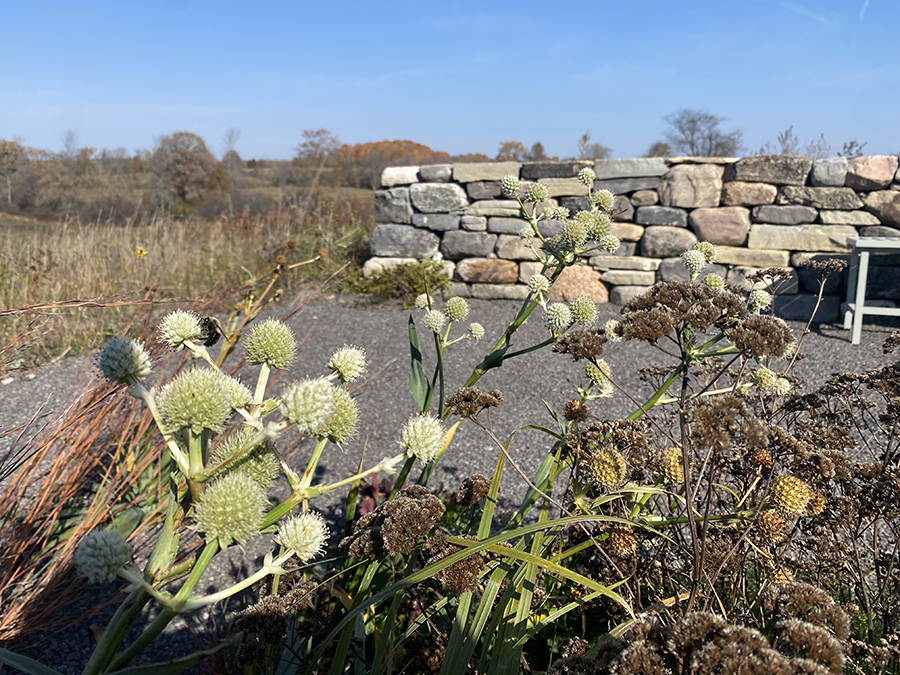
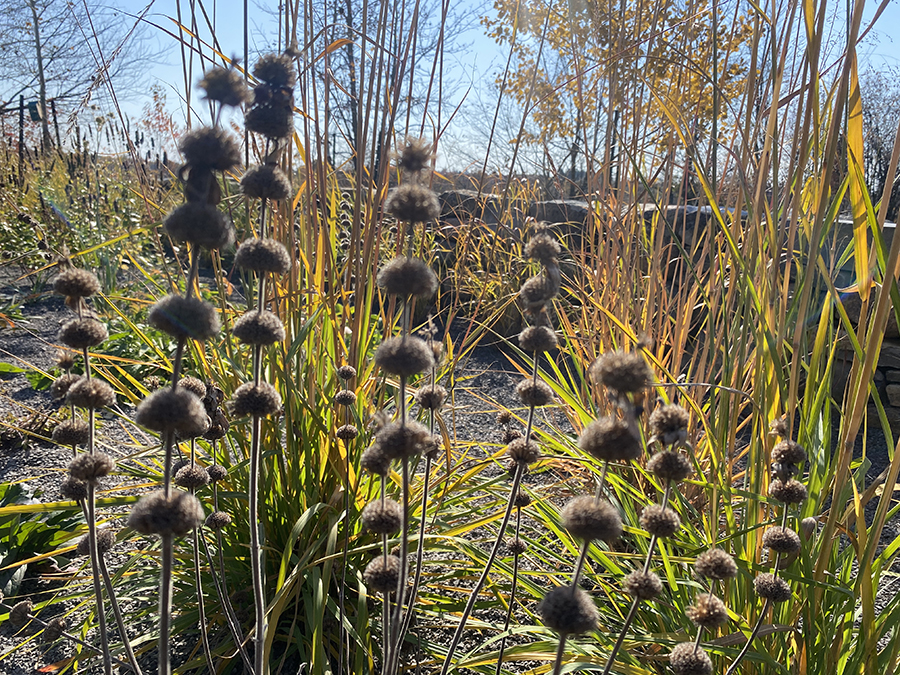
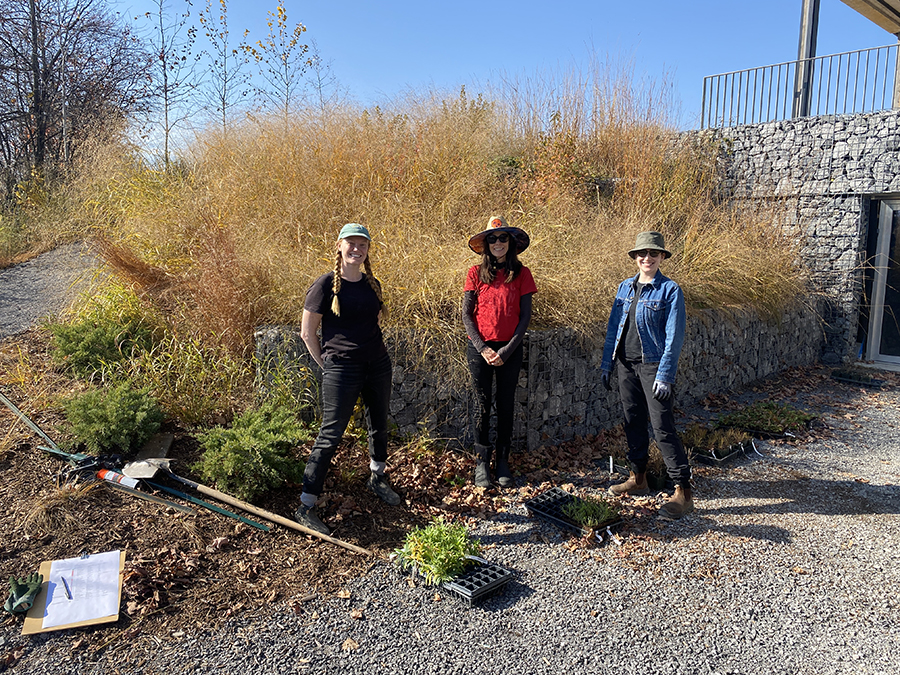
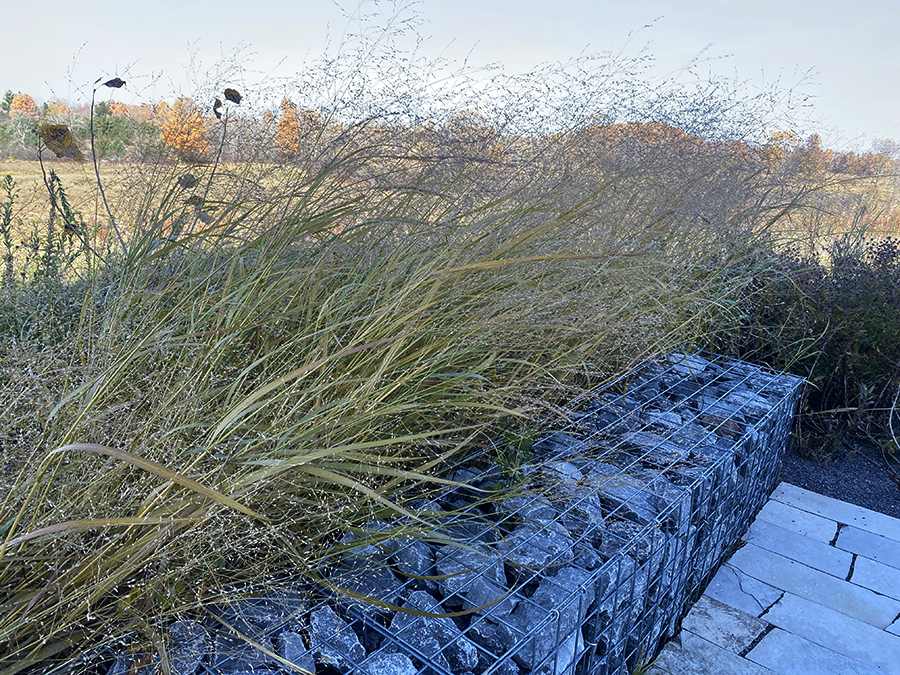
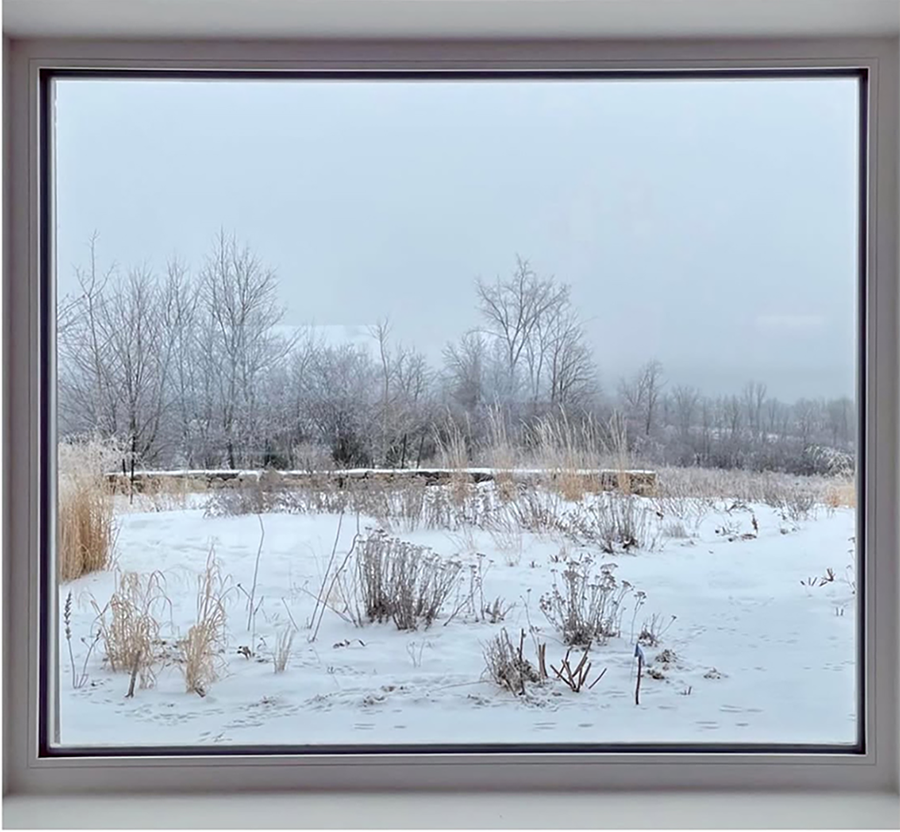
Perimeter stone terraces and a series of dry stacked and gabion walls define and frame gardens and paths and facilitate movement for our clients throughout the site. Walls respond to the architecture and blend with the landscape and agricultural vernacular where piles of rock heads are seen along hedgerows. To retain the sloped banks at the front and back of the house, gabion walls were installed, referencing their use in industrial infrastructure and riverside settings. The sloped plantings are textured with flowing native grasses such as Panicum virgatum, Sporobolus heterolepis and Sorghastrum nutans, as well as structured plantings of Juniperus horizontalis, Comptonia peregrina and Rhus aromatica.
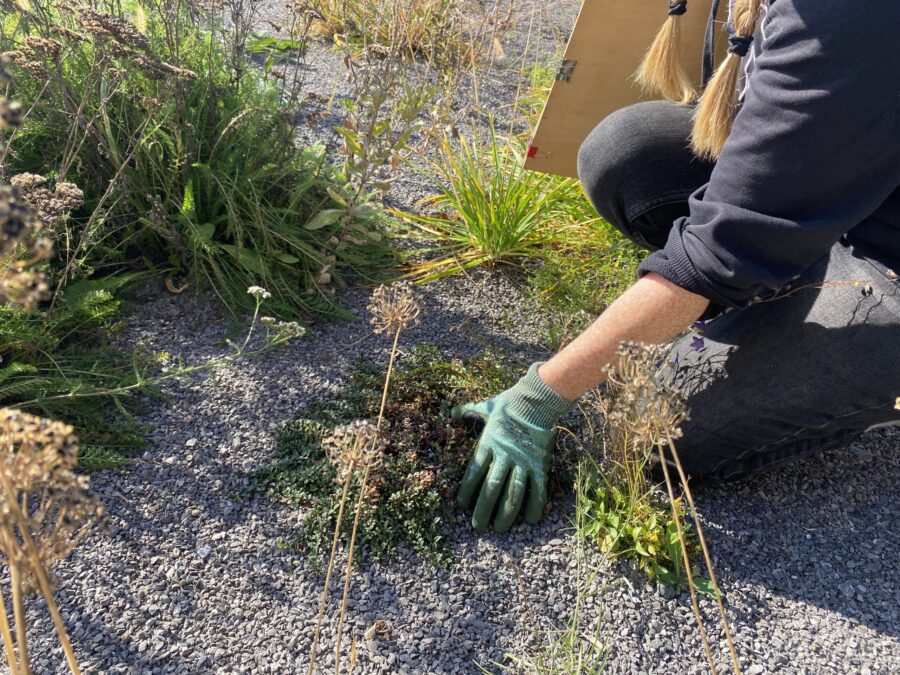
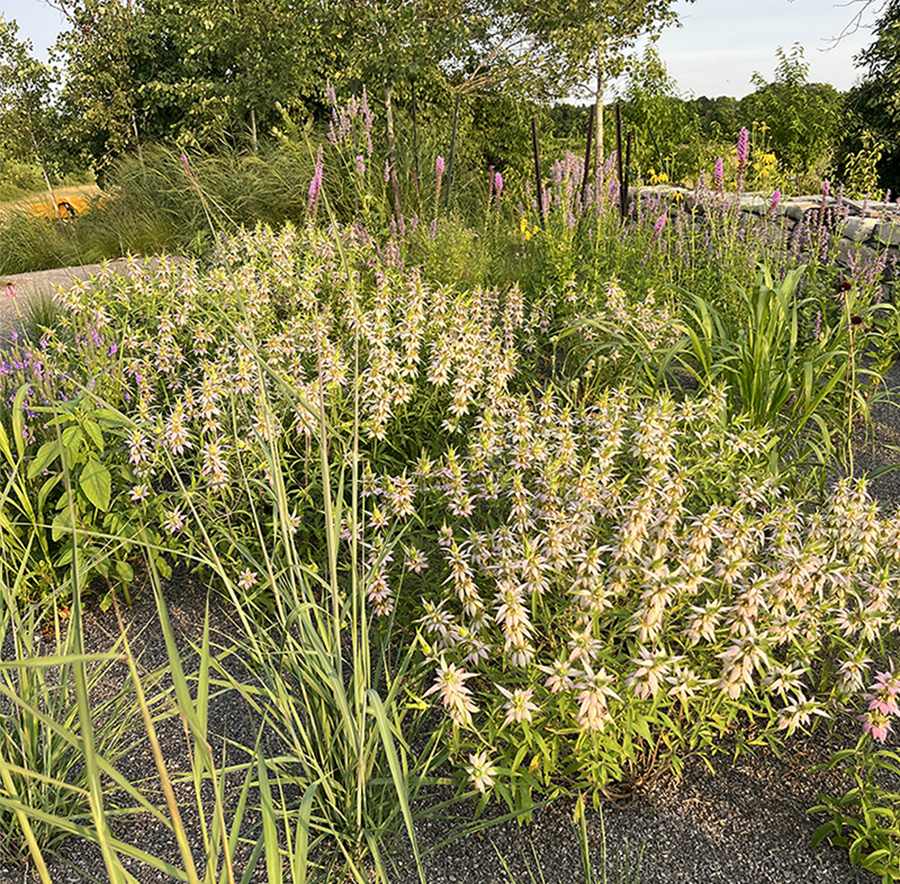
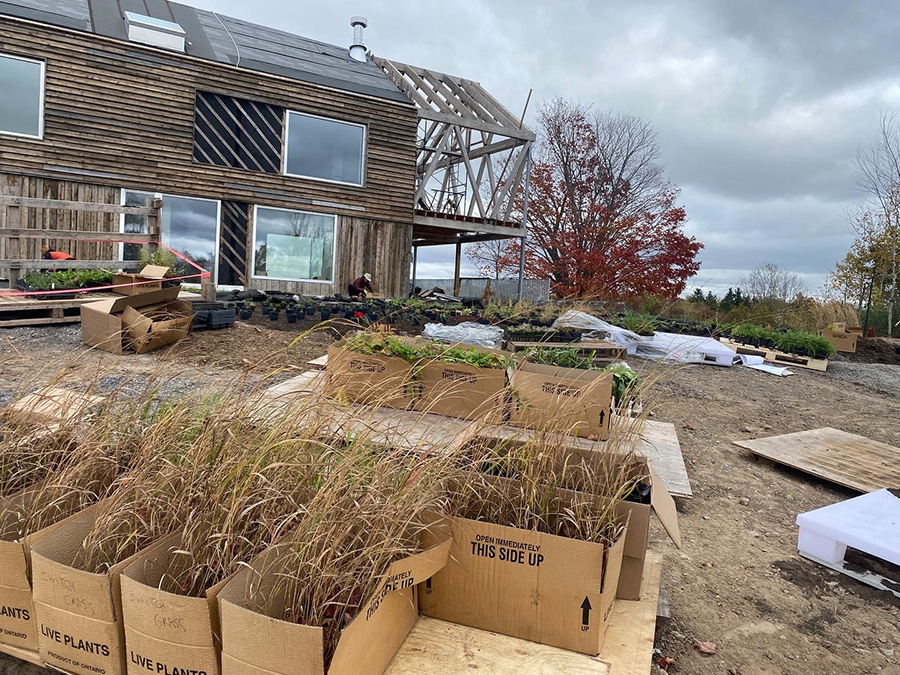
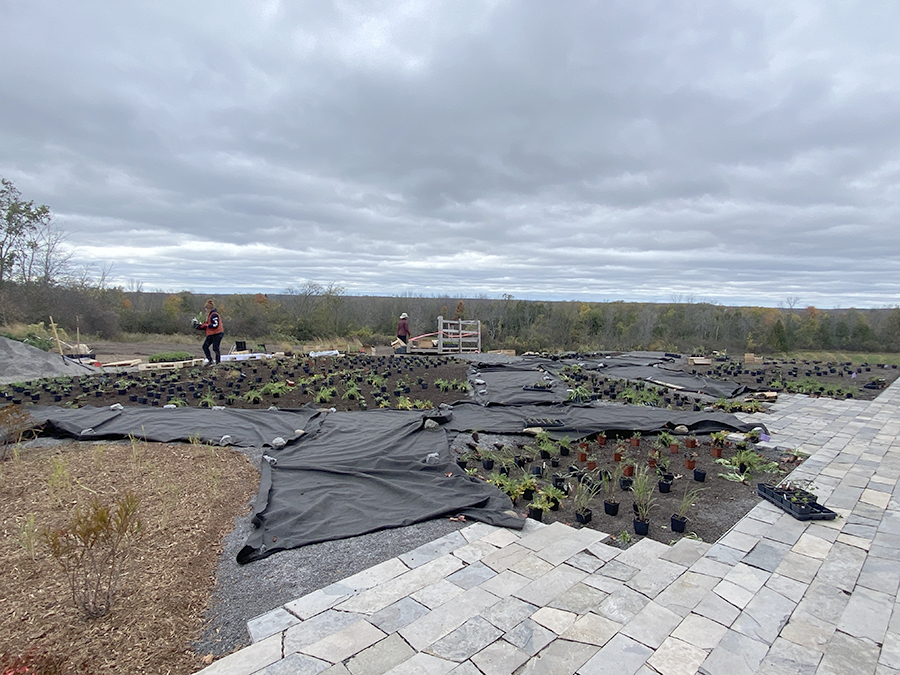
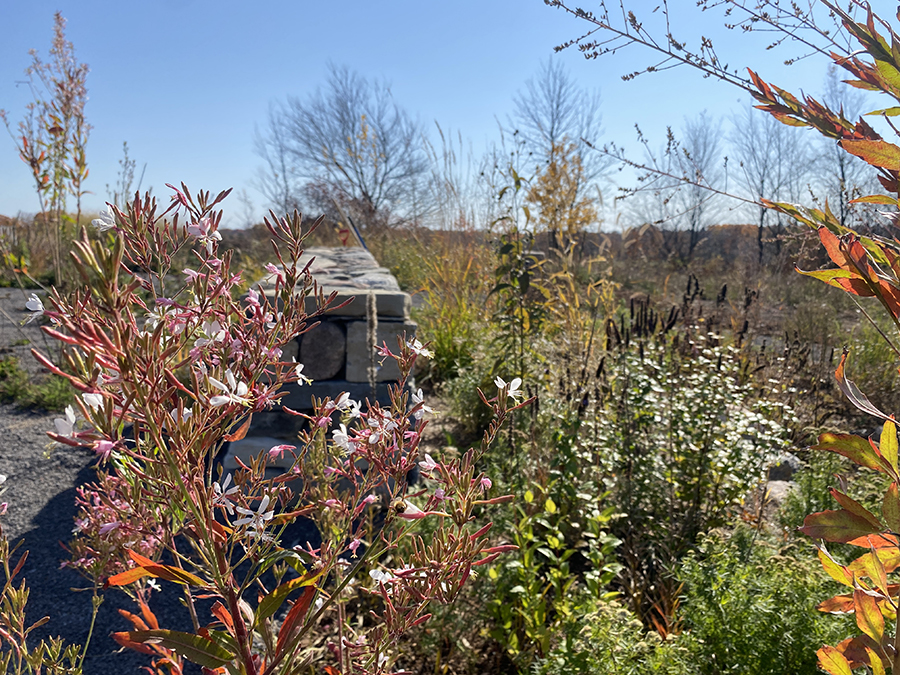
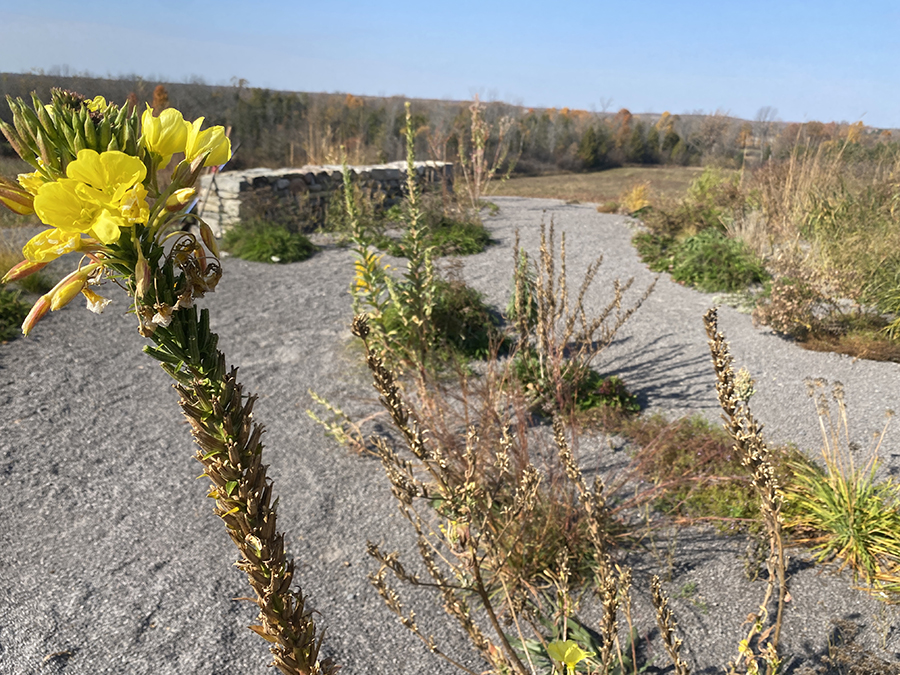
Underscoring our client’s intentions around regenerative land stewardship and biodiversity enhancement, we worked closely with the client, architect and the builders to create a low maintenance, drought tolerant garden design to complement a modern, low carbon home. Featuring twenty+ species and thousands of native plants planted densely, the gardens around the house use 4-6 inches of gravel as a mulch, applying the methods championed by UK garden designer Beth Chatto. To support habitat creation for a range of species including reptiles, amphibians, and insects, a one-acre fallow farm field was graded to allow for the collection of water into two newly created wetlands and a seasonal creek. With a goal to establish a resilient native plant community, the wetlands and the banks of the creek are planted with native trees, shrubs, and herbaceous plants, sourced from local nurseries. These areas are complemented by strategically placed piles of stones and logs, providing essential refuge and nesting sites. The remaining field will be seeded with a native shortgrass prairie mix in Spring 2024.
Our first planting in Fall 2023 allowed the plants to root and then go dormant, awaking in Spring with vigor, requiring little to no watering as the gravel mulch protected the soil beneath. Every spring the plants are cut to their base to prevent any build up of organic matter, where opportunities for seed dispersal are prevented. Although the dense native plantings will prevent a lot of seed dispersal of invasive species, the new garden will require some maintenance in its first years of development.
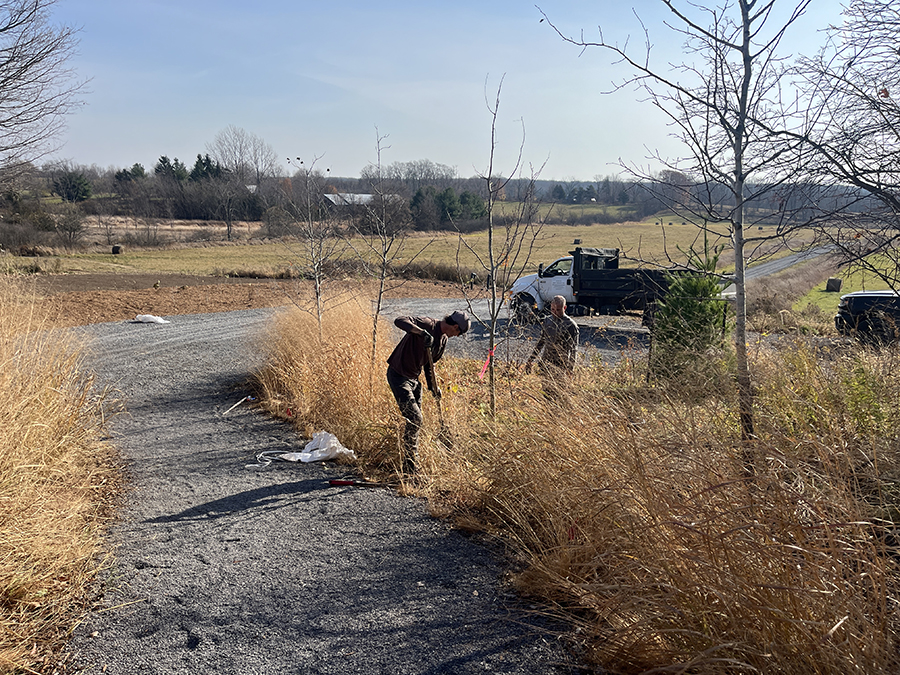
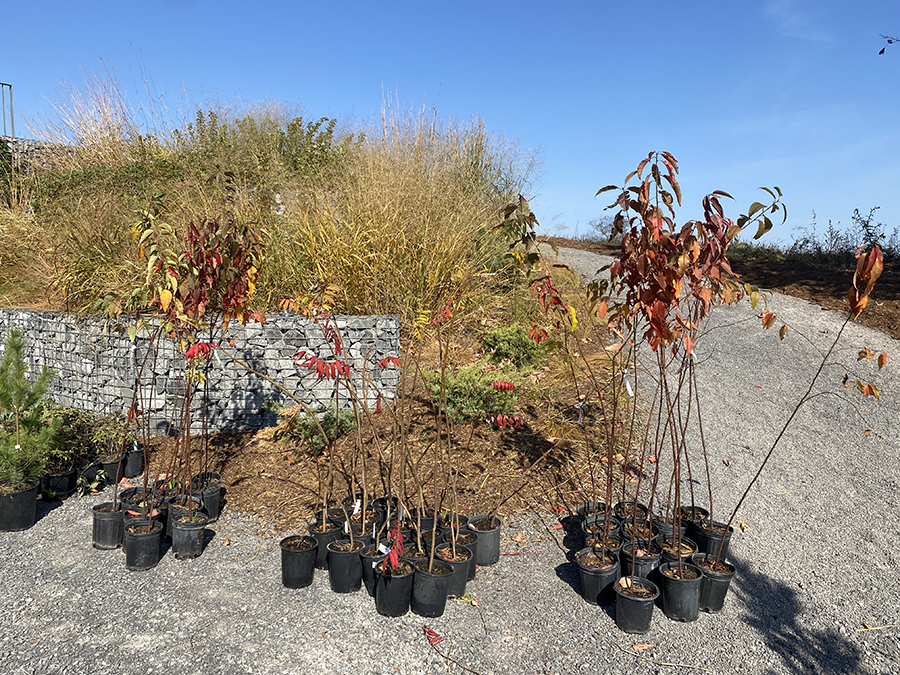
Turning to the rest of the property, native plantings of trees and shrubs reinforce and celebrate the historic agricultural hedgerow along the roadside entrance, with the intention of welcoming as many birds to the property as possible.
TEAM
CATEGORY
Master Plan Design
Designed Gardens
YEAR
2021-2025
LOCATION
Stone Mills, Ontario